





SIEF is an international organization that facilitates and stimulates cooperation among scholars working within European Ethnology, Folklore Studies, Cultural Anthropology and adjoining fields. SIEF organizes large international congresses and smaller workshops. Read more about SIEF...
Seventeen thematical Working Groups are active within SIEF which organize their own congresses and workshops.
SIEF News
SIEF Talk: Meet the Authors "The Folktales of Palestine"

SIEF is pleased to invite you to its second “Meet the Authors” talk. The topic of the conversation will be the book “The Folktales of Palestine: Cultural Identity, Memory and the Politics of Storytelling" (I.B Tauris & Bloomsbury, London) by Farah Aboubakr. The discussant will be Hande Birkalan Gedik (Goethe University Frankfurt).
The talk will take place on Zoom, Tuesday, 08 December 2026, at 6 pm CET (Berlin).
SIEF Talk: Meet the Authors “Sámi Media and Indigenous Agency in the Arctic North"
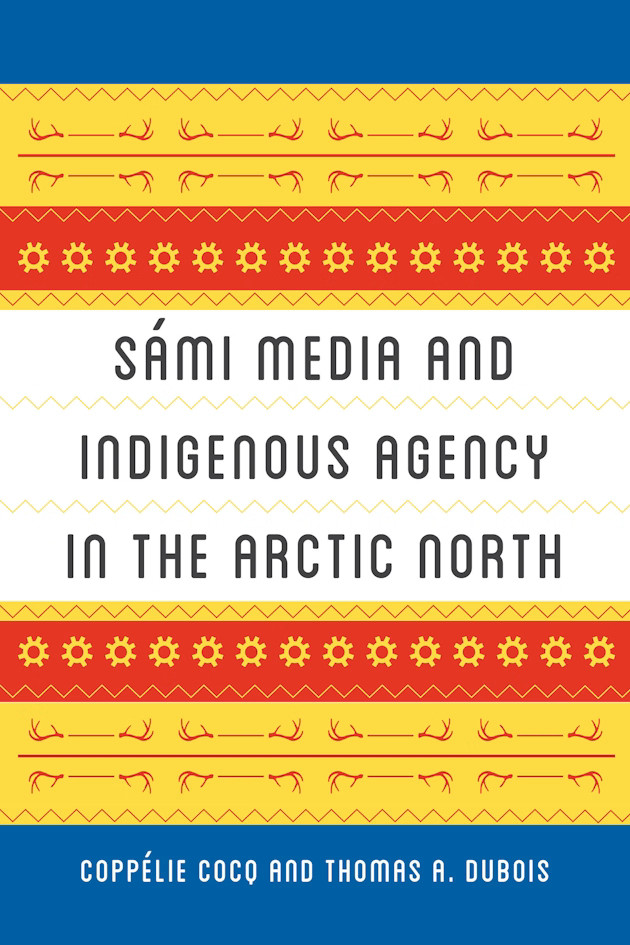
SIEF is pleased to invite you to its first “Meet the Authors” talk. The topic of the conversation will be the book “Sámi Media and Indigenous Agency in the Arctic North" (Washington University Press) by Thomas A. DuBois and Coppélie Cocq. The discussant will be Krister Stoor (Umeå University).
The talk will take place on Zoom on Wednesday, 14 October 2026, at 6 pm CET (Berlin).
SIEF Newsletter Spring 2026
We are happy to share the latest SIEF newsletter with you for Spring 2026.
We have both the beautifully laid-out PDF for download, as well as the webpage format, allowing you to more easily read this on your mobile device and share specific items by social media.
Call for Book Proposals: SIEF Series in Ethnology and Folklore — New Directions in the Study of Everyday Life, Past and Present
28/05/2026
Following its formal launch at the SIEF2025 Congress in Aberdeen, the SIEF Series in Ethnology and Folklore — New Directions in the Study of Everyday Life, Past and Present — is now actively seeking proposals for monographs and coherently edited volumes.
Co-edited by Hande Birkalan-Gedik (Goethe University Frankfurt) and Anthony Bak Buccitelli (Pennsylvania State University) and published by Berghahn Books, the rigorously peer-reviewed series brings together work from ethnology and folklore studies — fields distinct in their historical formations but united by a shared concern with the cultural and historical study of everyday life. The series welcomes scholarship that pushes the intellectual or ethnographic boundaries of contemporary or historical research, broadly defined, as well as work that addresses pressing everyday issues of global concern through exemplary ethnographic study.
The series is supported by an international editorial board: Marcin Brocki (Jagiellonian University), Peter Jan Margry (Meertens Institute, Amsterdam), Solimar Otero (Indiana University), David Shankland (Royal Anthropological Institute), and Ju Xi (Beijing Normal University).
We particularly welcome proposals from across SIEF's working groups and from colleagues whose research engages everyday life in its full breadth — from heritage, ritual, and material culture to digital practice, performance, foodways, community, and beyond. Both single-authored monographs and tightly themed edited volumes are within scope.
Inquiries about the fit of a potential project may be directed to the co-editors:
- Hande Birkalan-Gedik — birkalan-gedik(at)em.uni-frankfurt.de
- Anthony Bak Buccitelli — abb2(at))@psu.edu
Formal proposals should be sent to Berghahn Books at editorialus(at))berghahnbooks.com, following the publisher's submission guidelines, available at berghahnbooks.com.
If you have a manuscript in development, or know of colleagues whose work would suit the series, we warmly encourage you to be in touch.
SIEF Summer School 2026 06/11/2025
The Living Things, Lasting Forms, Narratives Summer School reconceives heritage as an ongoing, co-creative process in which material forms, narrative genres and living practices—human and more-than-human—mutually sustain one another.
The local organizer of the SIEF Summer School 2026 will be the Hellenic Folklore Research Centre, Academy of Athens and the Museum of Modern Greek Culture. The Summer School will take place 4-11 October 2026.
SIEF Working Groups News
Workshop Embodiment Revisited 13-14 August, Helsinki

In August 2026, the Feminist Approaches to Ethnology Folklore Working Group is hosting their second interim meeting. We will meet in Helsinki for a two-day workshop on the topic of ‘Embodiment Revisited’. Although embodiment has long been a central concern of feminist theory, we consider the topic as it intersects with feminist theory to be unfinished business. The concept of Embodiment has too often been reduced to mean ‘things that originate from the body,’ and there is a great need to advance this theoretically. With this workshop, we want to create the opportunity for all of us to develop our thoughts and research in a collective format, through discussion and critical thinking, to take advantage of the broad range of insights that can emerge through group interaction.
New name and mission statement: WG Museums, Material Culture and Communities of Practice
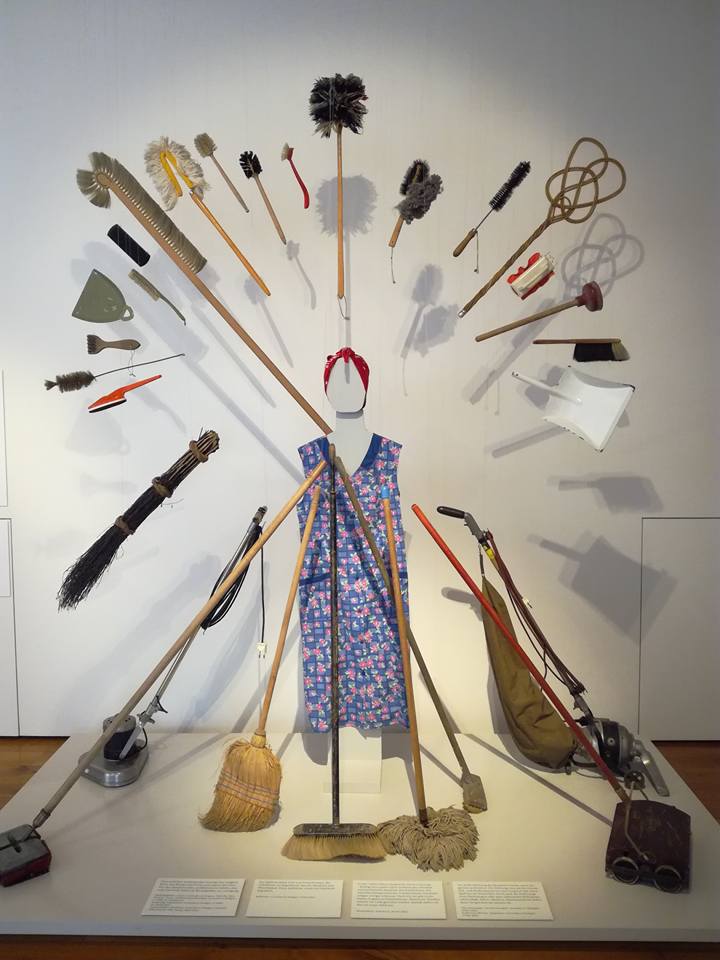
Museum der Alltagskultur, Schloss Waldenbuch, LandesMuseum Württemberg, exhibition Wohnwelten & Wohnstudio, photo taken by Inkeri Hakamies.
We are pleased to announce that the Working Group Museums and Material Culture has updated its name and mission statement to include Communities of Practice. We welcome all SIEF members to join the group and participate in this new chapter.
CALL CLOSED: Museums and Emotional Sustainability in a Time of Polycrisis

Co-organized by the SIEF Working Group on Museums and Material Culture, this conference invites you to thought-provoking discussions on how museums can address affective polarization, strengthen individual and collective resilience, navigate the emotional labour of museum professionals, and to reflect on the broader societal impact of emotional sustainability. Please submit your proposal by 30 April 2026.
Online Reading Club
 Photo: Olena Bohovyk
In 2025, the WG for Museums and Material Culture launched a new Reading Club to encourage more regular meetings and discussions about recent research. The club will generally convene once a month, with meetings held online. For each meeting, we will read a selected article or similar material of interest, but you can also join without preparation, as the discussions usually move on to cover more general issues.View details >>
XXXVth Eurethno Workshop (Council of Europe)

Photo: L. S. Fournier
5th conference of the SIEF Francophone Working Group
16th conference of the SIEF Ritual Year Working Group
Campus Carlone, Nice, France, 24-27 October 2026 – Université Côte d’Azur – LAPCOS UPR 7278. Organized by the LAPCOS UPR 7278 research unit and the department of ethnology-anthropology of the Côte d’Azur University, together with the FER-Eurethno network (Council of Europe), the International Society for Ethnology and Folklore (SIEF) and the French Society for Ethnology (SEF). View details >>
SIEF JOURNALS
New Issue of Cultural Analysis, 24:1 (2026)

This special issue of Cultural Analysis uses the example of folkloristic research in and about China—where translation of English-language theoretical writing, and minority traditions play a key role in the history, current status, and future trajectories of the folkloristic discipline—to re-center perspectives on translation in folkloristic theory and stimulate interest in translation work within the discipline.
New issue of Ethnologia Europaea, Vol. 56, no. 1
 A lively and wide-ranging issue, moving from the politics of personal names in Swedish academia to experiences of wildfire, fear of wild animals, culinary creativity, cake exchange in Norwegian confirmation celebrations, and changing agrarian worlds in the Italian Eastern Alps. As you journey through this issue, you'll discover thought-provoking discussions on daily life, rituals, interactions with the natural world, and a tapestry of unexpected connections. The issue features contributions by Maja Povrzanović Frykman and Eleonora Narvselius, Jenny Ingridsdotter, Riin Magnus, Auður Viðarsdóttir, Hildegunn Valen Kleive, and, in the Ethnographic Snapshot, Almut Schneider and Elisabeth Tauber.
